
Our Philosophy of Education
How We Learn at Noqte
To us, education is the cultivation of our capacity to understand, judge, and change ourselves, our relation to the world we inherit, and, where possible, the world itself. It begins with knowledge, but aims at understanding: the ability to examine what has formed us, test it against reasons and evidence, and revise it when necessary.
The movement from inherited knowledge to examined judgement lies at the heart of learning at Noqte.
Our Philosophy of Education
Noqte’s philosophy of education has been shaped especially by two works: Robin Barrow and Ronald Woods’ An Introduction to Philosophy of Education and Immanuel Kant’s An Answer to the Question: What Is Enlightenment?
Barrow and Woods place understanding, rationality, and autonomy at the centre of education. They distinguish education from socialization and indoctrination, and ask what it means for a person not merely to acquire knowledge, but to become educated. Most directly, Barrow writes that education is “primarily and essentially about understanding.”
Kant begins from the problem of intellectual dependence. Enlightenment is the movement out of a condition in which we rely on others to direct our understanding. Its motto is Sapere aude:
“Have the courage to use your own understanding.”

Noqte develops these ideas around a central educational question: how can a human being receive what others have learned, come to understand the world and themselves, examine what has formed them, and become increasingly capable of judgement and change?
The Human Being and Education
Education begins with a conception of the human being.
We do not merely experience the world. We can also step back from our experience and reflect on it. We can ask why we see something as we do, where our beliefs and desires come from, whether our judgement is sound, and whether another interpretation is possible.
At the same time, none of us begins from nothing. We are formed by nature, family, language, culture, religion, institutions, history, and other people. Much of this formation takes place before we are capable of examining it.
Education does not free us from having been formed. It can make that formation increasingly visible to us.
To become educated is therefore not to become unformed, but to become more capable of understanding our formation, judging it, and—where there are good reasons to do so—changing it.
We are formed by the world, but we can also become capable of examining and transforming what has formed us.
Knowledge as Inheritance
This process does not begin with individual reflection alone.
Human beings inherit an enormous body of accumulated knowledge. Other people have observed, discovered, created, compared, argued, experimented, failed, and understood before us. Their achievements have been preserved in language, books, artworks, traditions, sciences, institutions, technologies, and practices.
Education gives us access to this inheritance.
We do not need to discover mathematics, history, architecture, philosophy, music, or the accumulated experience of human societies again from the beginning. We can begin from what others have already learned and pass it on further.
Knowledge is therefore not merely a collection of information. It is also a connection between generations.
But receiving an inheritance is not the same as understanding it.
What has been passed on to us becomes educationally significant when we can enter into it: when we understand its reasoning, recognise relationships within it, compare it with other knowledge, and eventually judge it for ourselves.
Barrow and Woods distinguish the body of knowledge from understanding precisely in this respect: understanding involves grasping “the reasoning behind the body of knowledge,” rather than simply being able to repeat what is known.
From Knowledge to Understanding
Knowledge is indispensable, but education does not end with knowing.
A person may know a large number of facts without those facts significantly changing how they understand anything. Historical dates can be memorised; philosophical positions can be repeated; a scientific formula can be recalled without its reasoning being understood.
Education involves something further.
Barrow and Woods argue that becoming educated necessarily involves some kind of transformation: not merely an increase in the quantity of truths one knows, but a change in one’s ability to understand the world and act within it.
At Noqte, we therefore think of learning as a movement through connected stages:
encountering and knowing → comparing and analysing → understanding → judging → returning to oneself
We first encounter something beyond ourselves. We learn enough about it to take it seriously. We examine its relations, arguments, and context. And then we ask what follows from understanding it.
Sometimes nothing fundamental changes.
Sometimes something does.
“Education is primarily and essentially about understanding.”
Robin Barrow
& R. G. Woods
Reason and Judgement
Understanding requires judgement, and judgement requires reason.
For us, rationality does not mean arriving at the answer that we already prefer. A person can reason well and reach a conclusion with which we disagree. A person can also happen to reach a true conclusion for poor reasons.
What matters is whether we can explain why we believe something, attend to relevant evidence, recognise contradiction, consider serious objections, and distinguish reasons from forces that merely make a conclusion attractive to us.
This distinction is central to Barrow and Woods’ account of rationality. Rationality concerns standards of reasoning, not agreement with a predetermined conclusion.
This is also why education does not require the teacher to pretend to have no convictions.
A teacher may argue for a conclusion. A teacher may consider one interpretation stronger than another. A teacher may try to persuade.
The educational question is not whether persuasion takes place, but what kind of persuasion it is.
Conviction and Indoctrination
Woods and Barrow’s distinction between education and indoctrination is especially important to us.
The problem with indoctrination is not that a learner ends up strongly believing something. They write:
“The essence of indoctrination … is not to be found in the degree of conviction … but in the blind unshakeable commitment.”
Robin Barrow
& R. G. Woods
A strong conviction can remain open.
A religious, moral, philosophical, or political belief need not be weak in order to be rationally held. What matters is whether the person can still examine the grounds of the belief, consider the possibility that it is mistaken, and respond seriously to argument.
Barrow and Woods explicitly describe the closed mind as a defining feature of the indoctrinated person.
For Noqte, the distinction is therefore not between conviction or no conviction, but between conviction that remains answerable to reason or conviction protected from reason.
Emotion, trust, enthusiasm, attachment, and admiration are all part of education. They can draw us toward learning and help make difficult learning possible.
But they cannot substitute for reason when what is at stake is whether something is true.
The Courage to Examine Ourselves
Kant’s challenge is not simply to think more. It is to cease permanently handing the use of our understanding to others.
But these “others” do not always remain outside us.
The authorities, traditions, institutions, and communities that form us can become internalised. Their assumptions may come to feel like our own assumptions; their judgements like our own judgements; their limits like the natural limits of what can be thought.
Kant himself recognises something close to this problem. A person who has lived under guardianship for long enough may become accustomed to it, so that even after external restraints are removed, independent use of one’s understanding remains difficult.
Intellectual maturity therefore requires more than freedom from external authority. It requires becoming able to recognise where authority has already become part of ourselves.
For us, this leads to a further principle:
Criticism should begin close to home.
There are two reasons for this.
The first concerns judgement.
What is close to us is often more difficult for us to judge clearly. Our own beliefs, family, community, religion, country, and culture are connected to loyalty, affection, identity, memory, and belonging. These connections do not make them wrong. But they make impartial examination more demanding. So, we need to spend more time and effort on it. In other words, it deserves priority.
The second concerns responsibility.
We do not stand in the same relationship to every community and institution in the world. We have a particular responsibility to examine our own wrongs and the wrongs within the communities, institutions, and traditions in which we ourselves participate, and, where we can, to correct them.
The movement of criticism therefore begins inward and expands outward:
myself → my family → my community or religion → my country → my culture and region → the wider world
This does not mean that we should ignore wrongs elsewhere. It means that criticism should not become a way of escaping scrutiny of ourselves.
Kant’s own essay offers a significant example. In discussing religion, he argues that a clergyman acting as a scholar must be free to criticise faults in the institution to which he himself belongs. He also insists that the public use of reason must remain free.
Loyalty cannot by itself give us reasons to believe. But it can give us reasons to care. And care, when joined to belonging, brings responsibility.
Understanding, Change, and Pain
Not every act of learning changes the structure of our understanding.
Sometimes new knowledge can be added to what we already know without disturbing anything fundamental.
At other times, it cannot.
A new understanding may reveal that an assumption on which other beliefs depended is no longer convincing. We may have to reconsider how different pieces of knowledge relate to one another. We may have to revise a story through which we understood our history, our community, or ourselves.
In such cases, learning does not merely add something to us.
It changes something in us.
Understanding means change. And change often hurts.
The pain does not come from thinking itself. It comes from what may be connected to the understanding that is changing.
Beliefs can be attached to belonging, family, identity, loyalty, past decisions, friendships, hopes, and our image of ourselves. Revising a belief may therefore require more than replacing one proposition with another. It can require a reconstruction of part of the world in which we have lived.
Noqte does not treat change as a virtue in itself.
The aim is not to make people doubt everything, abandon what they have inherited, or continually reinvent themselves.
The aim is to develop the capacity to change when understanding, reasons, and evidence make change necessary.
The Teacher and the Learner
If understanding can require change, and change can be difficult or painful, then education also depends on the relationship between teacher and learner.
The teacher has two important responsibilities. The first is to help the learner see that the difficulty of understanding is worth enduring. The second is to make that difficulty as bearable as possible without removing it.
For this, the teacher needs to be courageous, honest, and kind. Courage is needed to face difficult questions rather than avoid them. Honesty is needed to say what one really thinks and to acknowledge uncertainty or error. Kindness is needed because serious learning can expose parts of a person that are closely connected to identity, belonging, and self-understanding.
This is why trust matters. The learner must be able to trust that difficult questions are being asked in the service of understanding, not humiliation or manipulation.
The learner, however, also has responsibilities. They need courage to face the possibility of change, honesty with themselves, and a willingness not to retreat immediately when learning becomes uncomfortable.
Above all, they must want something more or something different from what they already have.
Without that desire, movement does not begin.
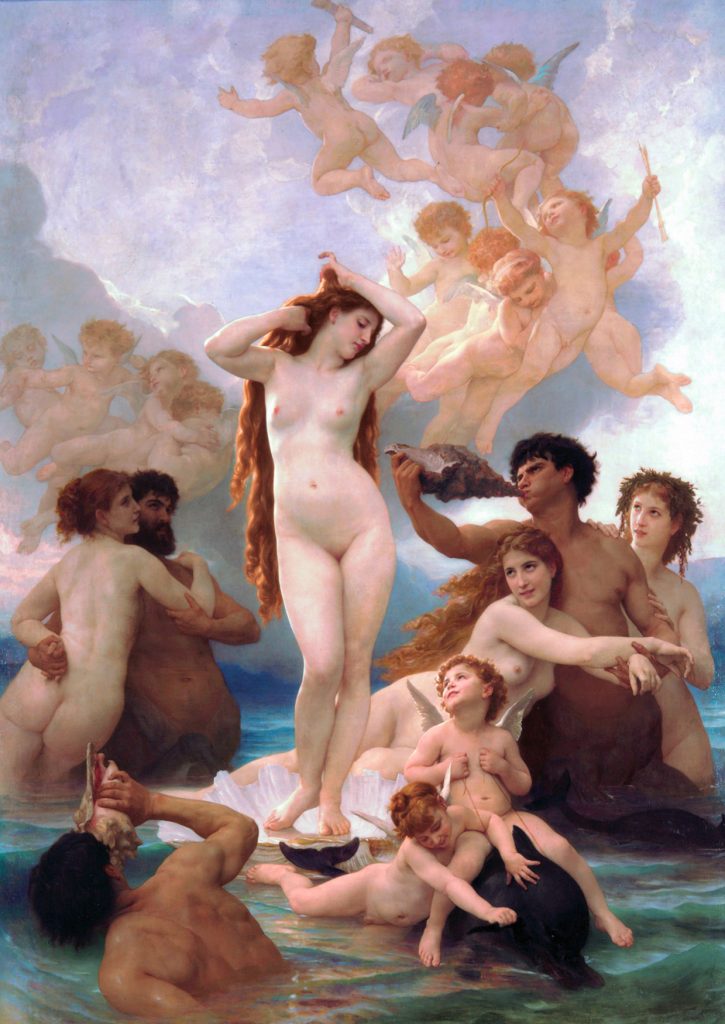
And one of the strongest forces capable of awakening such desire is beauty.
Beauty and the Desire to Learn
Learning requires desire.
A learner must want to move beyond what they already know, understand, or are capable of. Without that desire, education has little to work with.
At Noqte, we believe beauty can be one of the strongest sources of this desire.
A work of art, an idea, a building, a story, a mathematical relation, a human action, or another human achievement can awaken curiosity and attraction. It can make us want to look more closely, know more, and understand better.
For this reason, beauty has an important place in education. It can give the learner a reason to begin and a reason to continue when learning becomes difficult.
Beauty can awaken the desire to learn.
Creativity and High Culture
Creativity belongs within this movement from knowledge toward understanding.
It is not the opposite of accumulated knowledge. Meaningful creativity depends partly on what has already been learned.
Barrow makes this point directly in discussing creativity:
“To be creative in any specific sphere demands knowledge and understanding of that sphere.”
Robin Barrow
& R. G. Woods
At Noqte, creativity also means becoming able to see relationships that were not previously visible: connections between ideas, works, experiences, historical moments, or forms.
This is one reason we take high culture seriously.
By high culture, we mean intellectual, artistic, and ethical achievements in which human beings have confronted fundamental aspects of life with exceptional depth or precision.
Their value does not come simply from being old, canonical, famous, Western, Eastern, or institutionally approved.
They matter when they remain capable of rewarding serious attention.
We approach such works neither as authorities beyond criticism nor as objects whose significance disappears once their historical context has been explained.
We approach them as human achievements from which there may still be something to understand.
Shared References & Common Ground
The inheritance of knowledge is not only an inheritance received by individuals.
It also provides societies with shared references.
Stories, artworks, historical events, philosophical ideas, scientific discoveries, symbols, and concepts can become points in a common cultural landscape.
They allow people to compare, allude, disagree, interpret, and recognise patterns together.
Shared references do not require shared conclusions.
On the contrary, they can make disagreement more meaningful because people have something sufficiently common to disagree about.
Shared references do not require agreement. They make meaningful disagreement possible.
Part of Noqte’s educational and cultural work is therefore to help create and rebuild this common ground.
Autonomy
For Noqte, autonomy does not simply mean being free to choose.
A choice may be our own and still rest on assumptions we have never examined, loyalties we have inherited, habits we have acquired, or pressures we have internalised.
Barrow and Woods therefore argue that self-determination becomes a meaningful educational ideal only when it is joined to rationality:
“Self-determination is an uninspiring ideal unless it is combined with rationality.”
Autonomy, in this sense, means becoming increasingly capable of thinking and judging for ourselves with knowledge, understanding, and good reasons.
As we have seen, autonomy is not necessarily a rejection of what we inherit. It is a different relation to it. What was first received through formation can gradually become something understood, examined, and consciously held.
Likewise, Kant’s call to use one’s own understanding and Barrow and Woods’ insistence that self-determination must be joined to rationality converge on the same point: autonomy is not simply freedom of choice, but the growing capacity to take responsibility for one’s own judgement.
For Noqte, the movement of education is therefore:
from imitation to judgement, from knowing to understanding, from inherited assumptions to examined commitments.
It is the gradual formation of a person who can understand, judge, question, and change; a person increasingly capable of seeking truth without surrendering judgement to authority, habit, or fear.
In this sense, education is also a form of inner creation: the development of understanding, meaning, and the capacity to recognise and move towards beauty.